Eurovision 2026: The Story So Far

Before you read this post about Eurovision 2026, I encourage
you to have a look at my statement on this year’s contest.
The Eurovision 2026 season is well underway, with national
finals beginning all over Europe and plans taking shape in Vienna for the
contest’s seventieth anniversary. As I write, the first semi-final of this
year’s contest is exactly 100 days away, so it seems only fitting to take a
look back at everything that’s happened up to this point.
First of all, Eurovision has a new look! Last August, the EBU
unveiled a brand new logo for the contest. This new visual identity will be
adapted each year to reflect different host countries, and replaces the
previous generic logo which had been in use since 2015. Fans of the ‘Eurovision
heart’ will be pleased to see that fixture retaining its place in the centre of
the logo, and for this year only, the heart is being featured in the contest’s
artwork to mark the seventieth anniversary. The new logo uses the custom font ‘Singing
Sans’, and was designed, in the words of Eurovision director Martin Green, to “make
the ESC brand clearer on digital platforms”.
Now let’s address the elephant in the room. We have 35
countries participating in this year’s Eurovision Song Contest – the lowest
number since the introduction of semi-finals in 2004. Among those are Moldova,
Romania and Bulgaria; all returning after absences of one, two and three years
respectively. I think it’s absolutely brilliant that the EBU has managed to bring
these countries back to the competition (along with Montenegro who will be
participating once again), and it does give me hope that we will see other
countries such as North Macedonia, Monaco and Andorra (and possibly even
Hungary, depending on election results) back in Eurovision sooner rather than
later.
However, we have very sadly lost five of last year’s
competing countries: Iceland, Ireland, the Netherlands, Slovenia and Spain.
Following the 2025 contest in Basel, several broadcasters raised concerns about
Israel’s continued participation in Eurovision and questioned the integrity of
the televoting system. Last September, the national broadcasters of Ireland,
the Netherlands, Spain and Slovenia all confirmed that they would boycott
Eurovision if Israel was allowed to compete in 2026. Several other broadcasters,
including Iceland’s RÚV, stated that their participation was dependent on
various conditions. In response, the EBU extended its deadline for broadcasters
to confirm their intention to participate at the contest.
It was announced that a special general assembly of EBU
members would be held in early November, during which broadcasters would have
the opportunity to vote on Israel’s participation in the Eurovision Song
Contest. To me, this seemed like a reasonable compromise. However, the
establishment of a ceasefire deal and peace plan with the intention of ending
the Gaza war meant that this vote was cancelled, with the issue of Israeli
participation now set to be decided at the general assembly at the beginning of
December.
In November, the EBU announced a series of changes to the
voting system to “strengthen trust and transparency” in the wake of the
aforementioned controversy surrounding Israel’s result at last year’s contest.
These include establishing clearer rules surrounding the promotion of entries
(including prohibiting artists and broadcasters from engaging with third-party
promotional campaigns), reducing the maximum number of votes that can be cast
per device (or payment method) from 20 to 10, and enhancing systems designed to
prevent voting considered to be coordinated or fraudulent.
In addition, national juries will once again be voting in
the semi-finals (previous readers of this blog will know that I think it was a
big mistake to have removed them in the first place). Each country’s jury will
now consist of seven members, two of whom must be aged 18-25. The range of
professional backgrounds that jurors can be chosen from has also been expanded,
and jurors will now have to sign a formal declaration to confirm that they will
vote independently and impartially.
The EBU general assembly went ahead as planned on the 4th
December. Broadcasters were asked to vote on whether they were satisfied with
the proposed changes, yet the way in which the ballot was arranged meant that
by approving the new voting measures, broadcasters were also confirming that
they felt no need to have any further votes on participation in the 2026
contest. After an objection was raised by Spanish broadcaster RTVE, a
compromise was reached whereby a direct vote would be held concerning Israeli participation
should the majority of broadcasters vote against adopting the changes to the
voting system. However, this did not come to pass, as the assembly ultimately
voted in favour of the new measures, allowing Israel to compete in this year’s
Eurovision Song Contest.
For my more complete thoughts on Israel’s participation this
year, please read my statement linked at the top of this post.
Immediately after the result of the vote, the broadcasters
of Ireland, the Netherlands, Slovenia and Spain announced their countries’
withdrawals from this year’s competition. Icelandic broadcaster RÚV
then did the same the following week. This boycott has attracted widespread
media attention, and is quite possibly the most serious crisis Eurovision has
faced in its history. Despite Portuguese broadcaster RTP confirming
participation in the contest, thirteen out of the sixteen artists competing in
the national final Festival da Canção have announced that they will not
compete in Eurovision should they win the competition. Similarly, the winner of
Finland’s national final Uuden Musiikin Kilpailu will have the option of
declining to participate at the main contest.
However, what of the countries that are still planning to
participate? National final season has begun in several countries across
Europe, and we currently have five competing songs for Vienna. Personally, I’ve
been enjoying listening to more of the national final entries than I usually
do, and have been sharing some of my thoughts on Bluesky before each selection.
Whilst I’m usually not able to watch the shows themselves, it’s always nice to
see songs I have been rooting for do well.
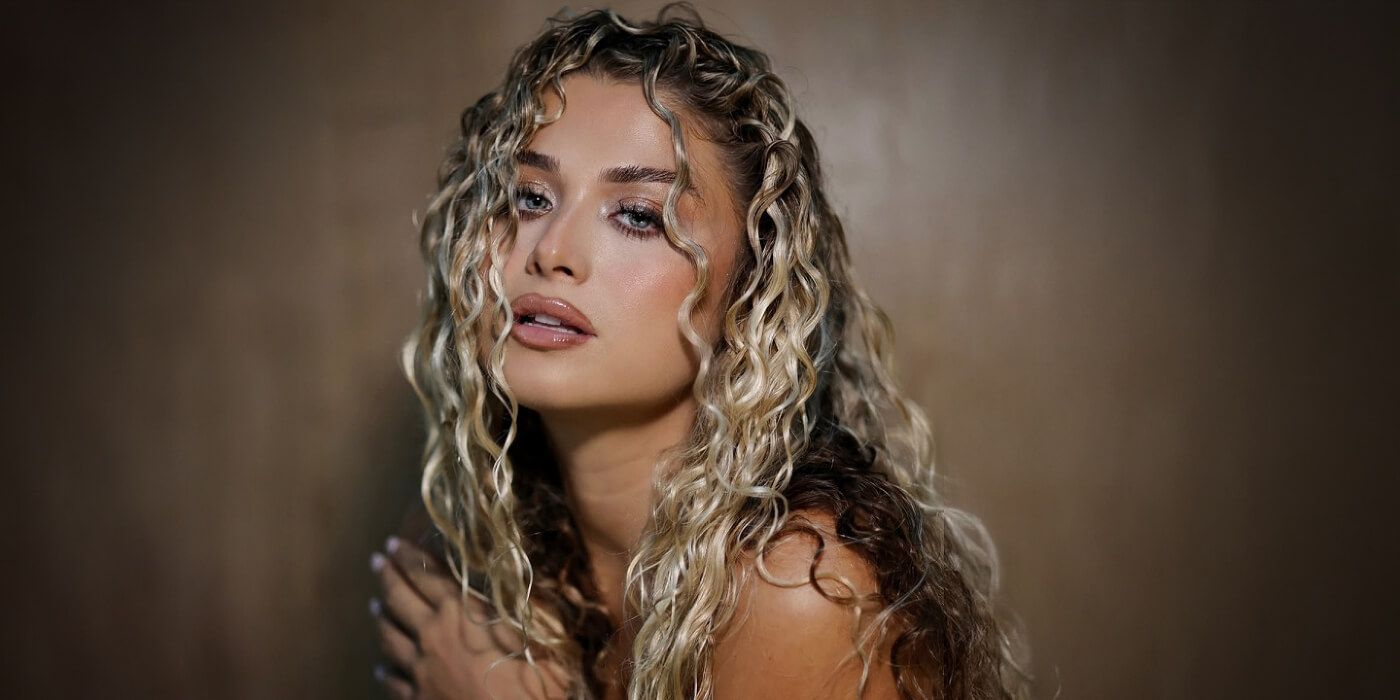
The first country to publicly confirm its artist for
Eurovision 2026 was Cyprus. Cypriot broadcaster CyBC tend to get in
there early with the announcements, and this year was no different, with Antigoni
being confirmed as the country’s representative back in November. Antigoni is
British, with Cypriot heritage, and will be familiar to some UK viewers as she
appeared on Love Island in 2022. We know that her competing song has
been written by Greek-Albanian singer Claydee, and that the music video has
been filmed already. Antigoni will perform the song live for the first time
during the second semi-final of Greece’s national final Sing for Greece on
Friday 13th February.
 |
| Antigoni will represent Cyprus at this year's Eurovision Song Contest. |
Another country known for selecting its Eurovision entries
early is Albania, with the country’s national final Festivali i Këngës
normally being held over the Christmas period. This year, the shows were
presented by Arilena Ara (who should have represented Albania at Eurovision
2020) and Salsano Rrapi, with Eurovision alumna Elhaida Dani providing artistic
direction. After two semi-finals and the annual ‘nostalgia night’, it was
eventually Alis who won the ticket to Vienna with his song “Nân”,
winning both the jury and public voting. Alis has since confirmed that, whilst
the song will undergo a revamp for Eurovision, it will remain in its native
Albanian.
Shortly after the conclusion of Festivali i Këngës in Albania, it was Montenegro’s turn to pick its Eurovision entry, with the national final Montesong returning for a second year. Among the contestants was Andrea Demirović, who represented Montenegro at Eurovision in 2009, as well as several artists from last year’s selection. The winner was decided by a combination of jury votes and public votes from both inside and outside of Montenegro. Flying the Montenegrin flag will be Tamara Živković with the song “Nova zora”. The song, which won the jury vote and finished second with the televote, will be performed in the Montenegrin language at Eurovision, although an English-language version will also be released.
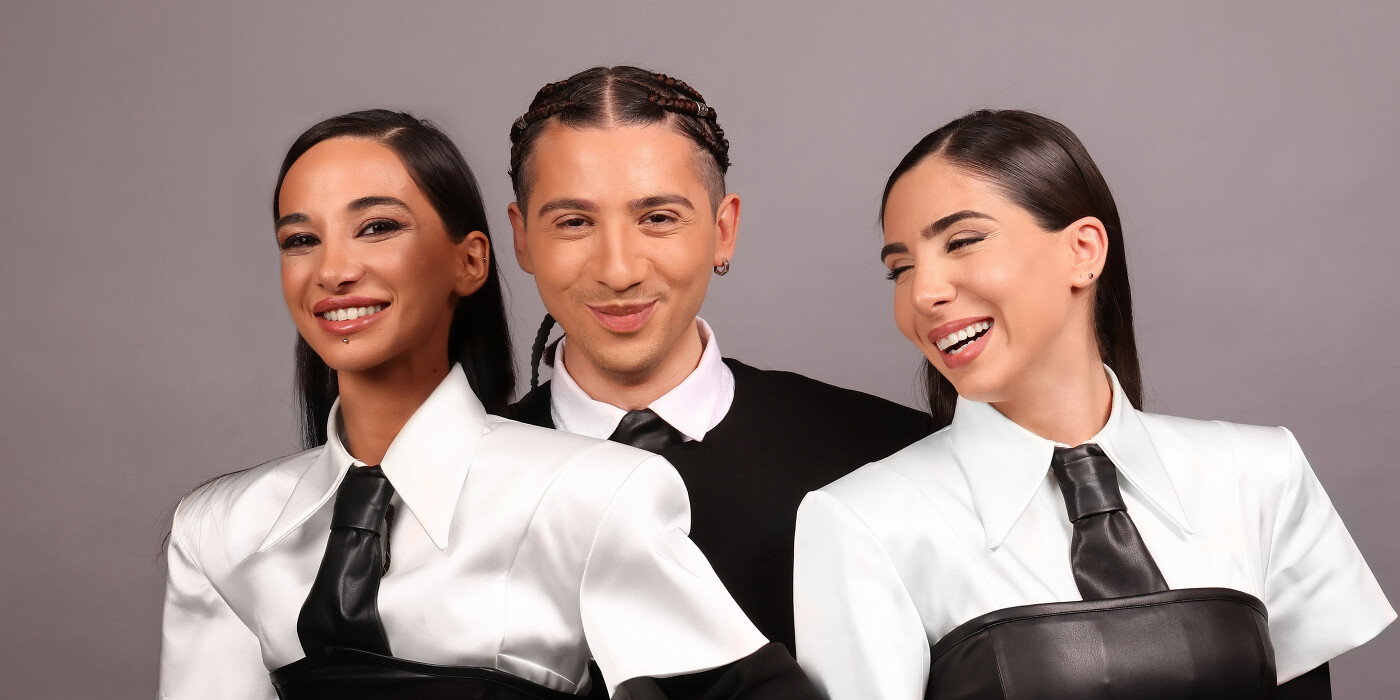
In January, we had some very exciting news from Georgia,
when broadcaster GPB confirmed that Bzikebi, winners of the Junior Eurovision
Song Contest in 2008, would be representing the country in Vienna. I was (and
am) thrilled about this, having shared my concerns last year surrounding
Georgia’s commitment to the contest. We saw at Junior Eurovision back in
December that Bzikebi are excellent live performers and that GPB do know how to
put on a show. Whilst Georgia’s competing song hasn’t been released yet (and
judging by previous years, we shouldn’t expect it any time soon), we do know
that it will not be “We Don’t Sleep”, the song Bzikebi performed at Junior
Eurovision last year as part of the interval act. If you read my recap
of the show, you’ll know that I wasn’t convinced by that song anyway, so I look
forward to seeing what else they have to offer.
 |
| Junior Eurovision winners Bzikebi will represent Georgia in Vienna. |
Returning country Moldova chose its comeback entry in January, with this year’s edition of Finala Națională presumably being of a sufficiently high quality so as not to warrant cancelling the entire thing and withdrawing from Eurovision altogether. Broadcaster TRM poured resources into the show, creating one of Moldova’s largest ever television spectacles and reinforcing the country’s desire to be included in Eurovision, and Europe more generally. The result was decided by two juries (one domestic, one international) and a public vote, which all voted unanimously in favour of Satoshi with the song “Viva, Moldova!”. To give you a sense of the landslide this song received, I would like you to know that Satoshi received more than twice the televotes of the fifteen other entries combined.
On the same night that Moldova went mad for Satoshi, Malta was also choosing its entry through their now-established national final, the Malta Eurovision Song Contest. The hosts of this year’s competition included Gaia Cauchi and Destiny Chukunyere (Malta’s two Junior Eurovision winners), and among the eighteen contestants were several veterans of the Maltese national selection. Twelve songs qualified for the final, where the results were decided by a ten-member jury and a public vote. After earning almost the maximum possible score from the jury and finishing second with the televote, it was Aidan who won the spot at Eurovision, where he will perform the song “Bella”. Excitingly, the song contains lyrics in Maltese, a language we haven’t heard at Eurovision since way back in 1972 (which was only Malta’s second Eurovision entry).
Another country to have announced its artist for 2026 is Switzerland,
with Veronica Fusaro being selected internally by Swiss broadcaster SRG
SSR. Following in the footsteps of Nemo and Zoë Më will be no easy task, but I
look forward to seeing how Veronica takes it on. Her competing song will be
released in March. On the same day, the Israeli singing competition HaKokhav HaBa
(The Next Star) concluded. The show is currently used to select Israel’s
artist for Eurovision, with broadcaster IPBC (Kan) usually opting to choose the
song internally. It was Noam Bettan who emerged victorious in the end,
and he will be the first male artist to represent Israel at Eurovision since
Michael Ben David in 2022.
Luxembourg has also selected its Eurovision entry, with
the Luxembourg Song Contest acting as the country’s national final as it has
done every year since 2024 when Luxembourg returned to Eurovision. Eight songs
competed, with three advancing to the superfinal. Ultimately, the clear winner
was Eva Marija, who is of Slovene heritage and won both the jury vote and
televote in a landslide. She will be performing the song “Mother Nature”
in Vienna, although in the week following the song’s selection, broadcaster RTL
has announced that it is consulting with various partners surrounding
similarities between “Mother Nature” and Birdy’s “Keeping Your Head Up”.
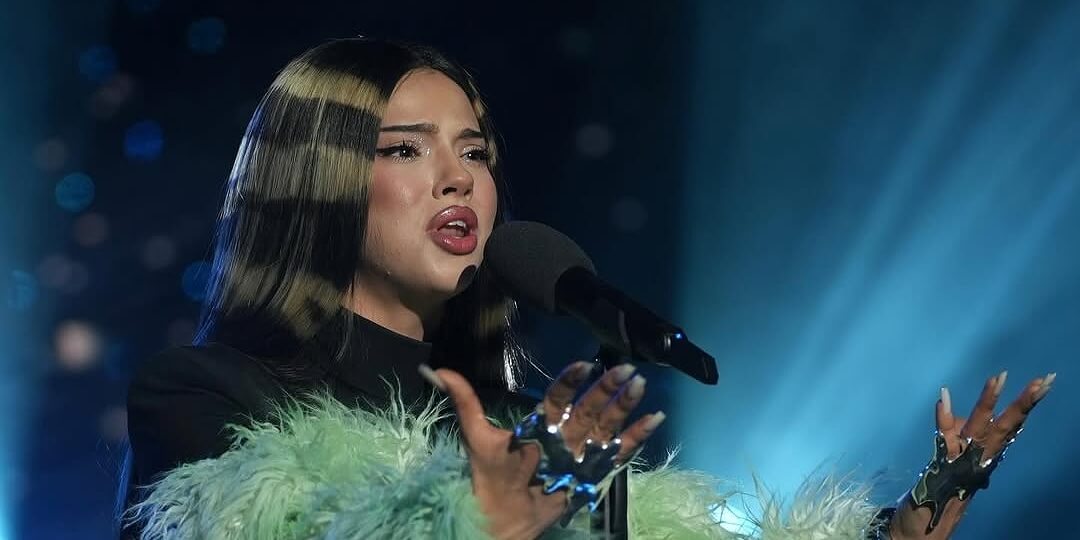
Finally, the first portion of Bulgaria’s Nacionalnata selektsiya
concluded this past weekend, with Dara beating seven other established
artists to become this year’s Bulgarian Eurovision entrant. Each competing
artist performed an existing song of theirs, and Dara, performing “Thunder”,
won both the jury vote and public vote. She will perform three new songs
written specifically for Eurovision in the next show, to be held on Saturday 28th
February, with the winning song becoming this year’s Bulgarian Eurovision
entry.
 |
| Dara, Bulgaria's artist for Eurovision 2026. |
But that’s not all! Preliminary rounds have commenced in several
countries, including Latvia, Lithuania and Sweden, where the first heat of
Melodifestivalen took place last Saturday. In addition, broadcasters in both
Australia and Czechia have indicated that we can expect to hear news about their
respective countries’ Eurovision entries very soon. This week, we can look forward
to the release of the songs competing in Serbia’s national final Pesma za Evroviziju,
as well as Ukraine selecting its Eurovision entry through national final
Vidbir.
I mentioned earlier that preparations are underway in Vienna for this
year’s contest, and we were given a glimpse of this in January at this year’s
semi-final allocation draw. This was held at the Vienna City Hall, and was
hosted by Alexandra Maritza Wachter and Austrian representative at Eurovision
2018 Cesár Sampson. The ceremony also included the passing of a ‘friendship
gift’ to Vienna (or rather the mayor of Vienna Michael Ludwig) from previous
host city Basel. This year’s thirty semi-finalists were divided into five pots
and allocated to either the first or second semi-final, as well as the first or
second half of their respective show. The five automatic qualifiers were also
allocated a semi-final in which they will have voting rights and perform their
entry in exhibition.
Finally, the other big news to come out of Eurovision-land this
week was the announcement of our hosts for Vienna 2026. ORF revealed that the
three shows will be hosted by Victoria Swarovski and Michael
Ostrowski. Swarovski is an Austrian TV presenter, model, designer and
entrepreneur, who has established herself as a significant figure in both
television and business, having set up her own beauty brand in 2020. Ostrowski
is a presenter, actor, writer and director hailing from the Austrian state of
Styria. He has been active for more than twenty years and is a recognisable
figure in Austrian media. A representative for ORF described the pair as “motivated,
exciting and extraordinary personalities” and presenters who “will be
remembered for a long time”.
That’s all from me this time! Apologies for such a long post, but
so much has happened and I wanted to cover it all. Going forward, I’m hoping to
publish a similar news round-up about once a fortnight, so will hopefully have enough
to discuss without it becoming too much of a chore to read. I’ve got some
exciting plans for the blog this year, so please do share your thoughts with me
either here or over on Bluesky, and let me know if there’s anything you would
like to see me produce.


Comments
Post a Comment